Some have gone as far as to suggest that the Gazans, while at the helm of extermination, and despite fighting against modern Fascism and the culmination of human malevolence, Kufr and injustice, are ‘not following the Sunnah’, that their resistance is not Islamically sanctioned, or worse, that the genocide results from their resistance itself…
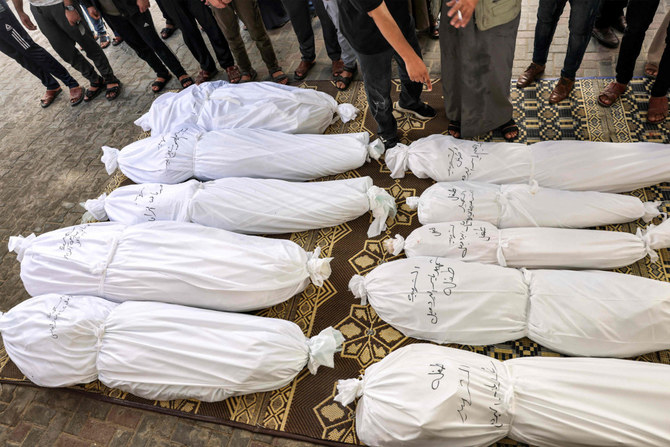
The Modern World insists that individuals wield the power to materially effect change and are in control of their destinies, reducing man from pursuing Truths (Truth-Centric) to pursuing measurable goals (Goal-Centric). This perception, steeped in the delusional ideals of Freedom and Empowerment, often leads to disillusionment when faced with situations beyond one’s immediate ability to halt or change, such as the Israel’s genocide in Gaza.
Frustrated by the lack of tangible results, many absorbed into this ideology have developed a resigned mindset, seeking refuge in ideologies that absolve them of responsibility altogether. This has allowed them to present their incapability as a conscious ideological choice.
Some have gone as far as to suggest that the Gazans, while at the helm of extermination, and despite fighting against modern Fascism and the culmination of human malevolence, Kufr and injustice, are ‘not following the Sunnah’, that their resistance is not Islamically sanctioned, or worse, that the genocide results from their resistance and the like.
“Those who sat at home, saying about their brothers, ‘Had they listened to us, they would not have been killed.’ Say, ‘Try not to die1 if what you say is true!’”[1]
Rather than acknowledging their limitations, seeking Allah’s forgiveness for their ineptness and inadequacy, while doing what they can, these individuals have gravitated towards ideologies such as ‘Madkhalism’ that encourage docility, passivity, and inaction. The thinking holds that if anything needed doing, they would have already done it – like the Makkan Polytheists would say: “Had it (Islam) been ˹something˺ good, they (the powerless Muslims) would not have beaten us to it.”
Gaza has highlighted significant religious matters over which they have had no influence – a cause so important to Muslims that it has become a type of litmus test for one’s religious credibility.
As a defence mechanism against accusations of abandoning such a significant cause, they simply claim that it was never theirs to begin with, protecting their self-image of righteousness, leadership, and exclusive ‘guidance’, or of being the ‘saved group’ and the ‘true monotheists’.
Resemblances with Western Cognitive Dissonance Around Gaza
This mindset shares resemblance with many non-Muslim, pro-Zionist voices. In the west, Gaza has broadly revealed two groups:
- Those who always knew that values such as Human Rights, Liberty, Equality, Justice, the rejection of genocide and so on were mere veneers for supremacism and colonial domination.
- Those who genuinely believed in these values, but were left totally disenchanted by their collapse -if they had ever stood-, or else their fallaciousness. Gaza shattered the false God of western, civilisational and moral superiority.
The first group or the ‘Abu Jahls’ should not be given any time. Within the second group, many who aligned with Zionist narratives -of ‘self-defence’, combating terrorism, protecting the Jew and so on did not do so because of their inherent support for Zionism -which is Fascism- but out of their inability to accept the failure of the values they effectively worshipped.
Germany’s stance, for instance, transcends mere ‘Holocaust Guilt’ and reflects Europe’s representative power’s deeper struggle to confront the ideological and practical failures of ‘Human Rights’. This shares interesting commonalities with those who forever claimed they were Islam’s only representative power.
Such behaviour becomes a type of Cognitive Dissonance where one holds two widely conflicting beliefs: first, that they are the supreme models of humanity, the ‘Saved Group’ or sect, or in the case of the West, the superior race or the pioneers of the superior system of Humanism and Rights; and second, their failure to actualise those notions when Gaza so clearly tested them to do so.
The fundamental issue, as discussed, was the inability to admit to one’s limitations or stand with what is right, even if such would not yield immediate, tangible results. Interestingly, many of those who accepted the failure of Western Humanism, being true to the timeless and transcendental values of Justice were actually guided to Islam.
A Historical Precedent
Historically, various Islamic-attributed ideologies emerged as a psycho-emotional reaction to their inability to understand why suffering occurs or why change often does not happen, even when those championing the change were of the foremost and greatest generations.
The emergence of various heretical schools can be traced back to the outcome of the ‘Qurrā Revolution’, also known as the Revolt of the Qurrā. Beginning in 699CE during the reign of the Umayyad Caliphate, the rebellion was primarily led by the ‘Qurrā’, literally meaning ‘readers’ or scholars.
These were a contingent of early Muslim soldiers, known for their knowledge and righteousness, including many of the second generation -the Tabi’een’, disillusioned with the unjust policies of the Umayyad governors, especially Al-Hajjaj ibn Yusuf. The revolt culminated in the Battle of Deir al-Jamaajim in 701 CE, marking the end of a long series of battles numbering more than 80 where the forces of the Qurrā, led by Abdul Rahman ibn Muhammad ibn al-Ash’ath were decisively defeated.
The battles were full of instances of prophetic gallantry. One of the leaders of the Qurrā’ by the name of Jabalah b. Zahr al-Ja’fi at one point exclaimed: “People, no fleeing is worse than yours, so fight on behalf of your religion and your dunya.” It is said that the famous Tabi’ee, Sa’īd b. Jubair said something similar to this, while al-Sha’bi would say: “Fight them on account of their injustice, humiliating the weak, and killing off Salāh.”[2] Though the motives were around ending political tyranny and social injustice, a noble endeavour, the revolt was crushed – failing to see the end it sought.
As a result, the era of the notables of the first generation Tābi’īn marked a watershed moment in the general Sunni position concerning armed revolts against oppression. The defeat of the Qurrā at Deir al-Jamājim at the hands of al-Hajjāj put into question the effectiveness of armed revolt against tyranny and oppression.
This is when verdicts (fatāwa) were issued outlawing armed revolt against tyrannical leaders, fuelling the positions of two distinct groups, the Jabriyyah[3] and the Murji’ah,[4] both of whom had defeatist viewpoints that diminished activism altogether against what they perceived to be unchangeable, fatalistic realities.
The Jabriyyah and Murji’ah shared a common thread regarding the concept of human actions and divine predestination (Qadr) as a reaction to the calamity they struggled to come to terms with.
- Jabriyyah: This school taught that human actions are entirely determined by Allah, and humans have no free will. Therefore, people are like puppets in the hands of Allah, and their actions cannot change what is preordained. And thus, their reality as passive bystanders to injustice was argued to be a matter of unquestionable predestiny for which action is of no avail.
- Murji’ah: This group emphasised that faith (Iman) alone is sufficient for salvation, and actions (good or bad) do not significantly impact one’s standing before Allah. They believed that as long as a person has faith, their deeds, or lack thereof, will not affect their fate – including the deeds of a tyrannical authority.
In both cases, there was a notion of resignation to Qadr and a minimisation of the significance of human actions, leading to the belief that efforts to change one’s fate or circumstances are unnecessary. In their words, because actions cannot yield material results, as shown by the crushing of the revolution, they become Islamically unnecessary. Again, it is clearly seen that the Qurrā themselves did not forge these distorted, heterodoxical views, as they would have instead seen their activism against injustice as the necessity, instead of measuring the validity of their actions by their material consequences or lack thereof.
Ironically, today, the same schools that teach passive resignation to the reality of the Zionist occupation and massacres in Gaza, arguing it is their fault, or there is nothing we can do vehemently teach against the misguidances of the Jabriyyah and Murji’ah. And in many ways, ideological elements of these historic groups are prevalent modern-day discourse among ordinary people concerning Gaza.
‘Modern-Day Murji’ah’
Madkhali groups are often termed ‘modern-day Murji’ah’ for the very same reason. Both ideologies raise the white flag from the outset, accepting the status quo as some sort of imperative and relegating action to futility. These ideologies are reactionarily formed. In the case of the Madkhalites, most agree that the ‘formalisation’ of the ideology of absolute obedience to the status-quo, including Zionism, or accepting everything for what it is ‘as we can’t change it’ initially came about to justify the presence of US military bases in parts of the Muslim world.
Accusations against these groups demanded the creation of a ‘Legitimising Narrative’ so to speak, particularly in light of this group having created a backdrop of being the unabated ‘people of Tawhid‘, the role models of the Muslims – or God’s ‘Chosen Ones’ – sharing commonality with another peculiar group who have gone to lengths in justifying genocide (an abomination) under the forged notion of being ‘God’s Chosen People’.
Gaza Has Challenged All Distorted Notions
The Gazan genocide has come to remind that activism, struggling on the Path of Truth and Justice is inherently essential. Such is not about seeing our desired milestones, be it the liberation of Palestine or the immediate end to Zionism -though no Muslim doubts they will eventually arrive’ but is the necessity of the Muslim, even if he is killed on that path, or no stone is left unturned in its pursuit.
Man was never the master of his destiny, contrary to the ideas espoused by countless self-help writers such as Napoleon Hill in statements such as: “You can influence, direct or control your own environment… (and) make your life what you want it to be.”[5]
The Modern-World relentlessly venerates man, and through this befouls itself into thinking that ‘failure‘, if its definition is failing to see a desired outcome is always a consequence of ‘doing something wrong’ or failing to follow ‘self-help’ protocols.
By consequence, for one to see their desired outcome, they must have done something right, and their examples go on to form as case-studies in these self-help books. It reveres those who achieve the outcomes they desire, and disregards those who do not, or pushes them into despair. A man of truth utilises, rather than worships the means to change, and will entrust the outcome to the Controller of Affairs, the Almighty.
Ibrāhīm ʿalayhi al-salām did not manage to persuade his father for no fault on the Prophet, but because his father was destined to err, and indeed insisted on it. The story shows that wholesome, guided and above all, sincere efforts may never yield one’s sought after results, as man bears no control over their own destiny, let alone others.
How would the Modern World have seen Jonah, or Yunus ‘alayhi asalām, for instance, whose message only reached and resonated across the far corners of Nineveh after he had departed his people? Consider as well Pharaoh’s sorcerers, whom, after having submitted to the Creator were all hung and dismembered. What says of the ‘Companions of the Ditch’, who all believed in the young boy’s message of Truth, for them to be thrown into a burning ditch. Allah asserts their triumph, despite having been tormentingly set aflame:
“Those who persecute the believing men and women and then do not repent will certainly suffer the punishment of Hell and the torment of burning. Surely those who believe and do good will have Gardens under which rivers flow. That is the greatest triumph.“[6]
In fact, the measure of success is not to expect tangible outcomes, but, like the Gazans, to embark on the Path of Truth and Justice, whether observable ‘milestones’ are seen in this temporal, earthly life or not. Anything ephemeral that presents itself, whether victory, an agreeable crowd or a vociferous enemy becomes nothing but to test one’s resolve on this noble journey.
References:
[1] Qur’an 3:168
[2] Al-Bidāyah wa Al-Nihāyah by Ibn Kathīr (d. 774AH)
[3] The belief that man has no choice and is driven to do what he does by an external force he has no control over.
[4] The belief that internal ‘belief’ and the ‘kalimah’ are absolutely enough for one’s salvation regardless of the sins a person commits.
[5] Napoleon Hill, Think and Grow Rich
[6] Al-Qur’ān 85:10-11

 SarimBlog