The Disintegration and Denominations of the Trinitarian Church
During this period, God sent his final messenger, Muhammad sala Allāhu ‘alayhi wasalam to renew his covenant, revive what had been lost and salvage humanity as a whole from the calamitous decay of Christian (and Jewish) theology. The Qur’ān would serve as God’s Final Testament to clarify and to preside over all that had been revealed before, while confirming the fragmentary truths that continued to exist.
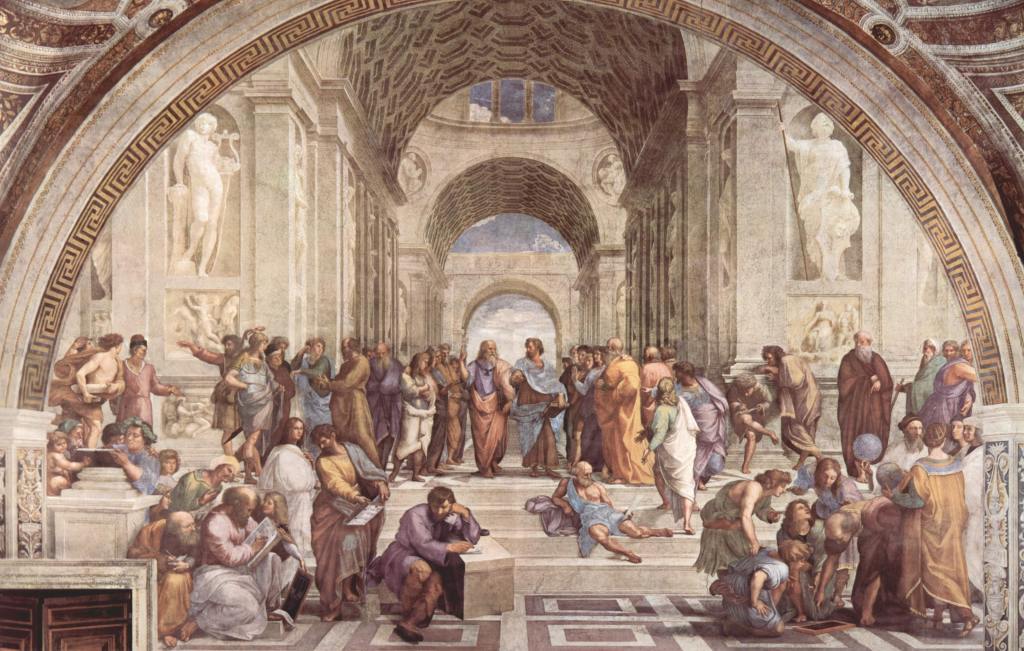
Dr. Najmuddin Hasan and Ahmed Hammuda
The Council of Nicaea in 325CE, in particular, was a pivotal moment in Christian history where political forces intersected with theological debates, shaping the trajectory of the Church and its relationship with the state. From thenceforward, the pure monotheistic tradition within Christianity was all but lost in exchange with Pauline, Hellenistic paganism, and political expedience.
The Ecumenical Councils that followed, again, ultimately aimed to achieve unity within the Roman Empire, almost always at the expense of Jesus’ true message. These councils nonetheless became central in defining today’s mainstream Christian doctrine and the legitimacy of clergy through apostolic succession.
In this article, we outline the gradual pre- and post-Nicene degeneration of Christian theology, the schools of Christological thought appearing over the ages, other major stations in Christian history, and modern remnants of monotheism among Christian groups that overlap to some extent with Islamic theology. The table below summarises the theological positions of prevalent Christian schools of thought in approximate chronological order, emerging throughout the period of the seven ecumenical councils covered in the previous article.
| School of Thought (Chronological) | Theological Position on Christology |
| Ebionites | Jesus was the Messiah, foretold in the Old Testament, and referred to himself as the Son of Man. They observed every detail of the Mosaic Law as prescribed and practiced by Jesus himself. |
| Arianism | Christ is Created and not associated (co-substantial or co-eternal) with God; the title ‘son of God’, or to be ‘begotten’ refers simply to Prophethood and creation. |
| Docetism | Christ existed as a spirit, not as a human. Christ entered Jesus’ body at the baptism and left just before the crucifixion. |
| Macedonianism | Denied that the Holy Spirit is part of the Godhead, i.e., denial of the Trinity. |
| Nestorianism | Jesus Christ is composed of two natures and two personalities, one Divine and one Human fully participating in both uncreated and created realities. |
| Monophysitism | Jesus Christ has one nature and one personality where the human is subsumed by the Divine. |
| Miaphysitism | Jesus Christ has two natures and one personality where the Divine and human nature combine and unite. |
| Pelagianism | The original sin of Adam is not inherited; hence man is born free of sin. |
| Dyophysitism | Jesus Christ has two natures and one personality where the Divine and human natures remain distinct. This became the Chalcedonian Creed which is the foundation of virtually all Christians today. |
The progressive fall and fragmentation of the Christian Church into splinter denominations continued the centuries, and some of the most pivotal events are briefly mentioned below:
1054AD: The schism of Christian Europe into Eastern Orthodox and Western Orthodox (Roman Catholic)
This schism is little to do with theology, but whether the sacrament (sacred rituals) should be in Greek or Latin and the authority of the bishop (Patriarch) of Rome (the Pope) extends over all other Bishops (Patriarchs). The Eastern Orthodox wanted the liturgy in Greek and felt all the Patriarchs (Archbishops) were equal, with the Patriarch of Rome being ‘First among Equals’, whereas the Western Orthodox wanted the liturgy in Latin and the Patriarch of Rome to have authority over all other Patriarchs.
1095AD: Pope Urban II declares the Crusades against the Muslims (to unite the Christians)
Although this episode is not particularly theological, it came very soon after the East-West Schism of European Christianity and provided as a futile attempt by the Roman Patriarch to re-establish his authority over the Eastern Church. Ironically, it actual exacerbated the division when western crusaders confused eastern Christians with Muslims and slaughtered them instead.
1300-1400AD: Beginning of Renaissance thinking, ‘rebirth of the idea of human greatness’
The Hellenistic virus first introduced by Paul within the Christian creed re-ignites and immerses the Christian world, flooding it with Greco-Roman idolatry and fantasy in the name of ‘Art’. Although, there appeared a period of co-existence between Christianity and the Greco-Roman rebirth, the latter was effectively the death knell of the former. The Renaissance seed would subsequently bring birth to the Age of Discovery (Colonisation) (1434AD), Industrial Revolution (1760AD), the Theory of Evolution (1860AD) and secularisation (a form of modern polytheism through the deification of man).
1453AD: Muslim opening of Constantinople.
The Conquest of the seat of the Eastern Orthodox Church by the Muslims, effectively relegated the Eastern Church to a supporter of the Church of Rome (Western Church). It must be emphasised that the Eastern Orthodox Christians did live in peace and safety under the Ottoman Muslims and were able to administer limited authority over the Christian community within the Ottoman Empire.
1492AD: Fall of Muslim Spain and the European re-discovery of the Americas.
The Fall of Muslim Grenada to the Christians kings in their Reconquista not just signified the expulsion of Muslims in Western Europe, but the ascension and power of military kings over the Pope. The capitulation of the Pope to secular worldly power subsequently undermined his authority and lead to the ‘Reformation’.
1517AD: The Protestant Reformation
Martin Luther submitted 95 theses to the Roman Catholic Church challenging its errors, abuses and corruption. In 1521, the Edict of Worms declared Martin Luther a heretic, at which point he established his own church (Lutherans) and opened the door for John Calvin (Calvinism) and Henry VIII (Anglicanism) to do the same. Essentially, the authority of the Pope was removed, and the liturgy and scripture were translated into the native language of their communities. This made scriptures readily accessible to everyone, regardless of knowledge and allowed for more self – determination and independence from the Church structure. Baptists, emphasising on Divine Grace and Methodists, emphasising on good actions were later offshoots of this schism.
Modern Renderings or Remnants of Arianism
Most remnants of Arianism within the East diminished after the advent of Islam and were enveloped within the Truth of the Final Message. Three new flowerings occurred within Western Europe:
- Unitarianism started shorted after the Protestant Reformation and had many signatories including Isaac Newton. Contemporary commentators consider both Newton and contemporary, John Milton (English poet and intellectual) as “Arian heretics” who both asserted “the createdness of the Son of God.”[2] Although in Unitarianism, the sacrament was still in Christian form, based upon the Bible, the creed has major overlaps with the Muslim view of Jesus and the Islamic understanding of Monotheism.
- Jehovah’s Witnesses (1870AD) assigned Jesus as a created angelic figure who came to this world as a perfect human and saviour to mankind. He has the position of mediator and intercessor between God and man. They do not recognise the person of the Holy Spirit.
- The Church of Jesus Christ of the Latter-Day Saints (Mormons) (1830AD) believe in a social trinitarianism, with the Father, Son, and Holy Spirit as three deities of single purpose and will. The Father being the Supreme pre-eminent Deity from which the Son and Holy Spirit emanate and are subordinate to.
The seven ecumenical councils concluded the present-day definition of Jesus Christ with the Nicene Creed and the Chalcedonian Definition. All present-day Christian denominations find their root creed from the seven councils. Following the First councils of Nicaea and Constantinople, many of the alternative narratives and gospels (15-20 in number) were eradicated. The subsequent schisms within Christianity resulted from the authority of the Church, the method and language of the sacrament (scared rituals), the access and interpretations of the scriptures and the paradox between pious actions and divine grace.
During this period, God sent his final messenger, Muhammad sala Allāhu ‘alayhi wasalam to renew his covenant, revive what had been lost and salvage humanity as a whole from the calamitous decay of Christian (and Jewish) theology. The Qur’ān would serve as God’s Final Testament to clarify and to preside over all that had been revealed before, while confirming the fragmentary truths that continued to exist.
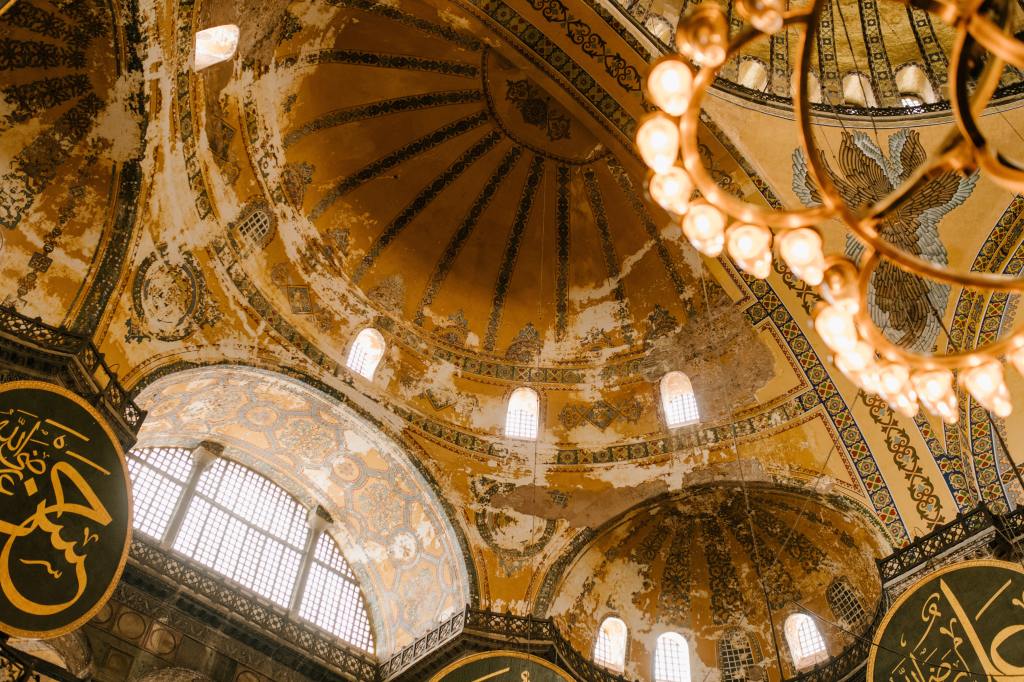
Unlike the previous scriptures, He promised that it would spread, command, and be divinely preserved until the end of time.
“O People of the Book! Now Our Messenger has come to you, revealing much of what you have hidden of the Scriptures and disregarding much. There certainly has come to you from Allāh a light and a clear Book. through which Allāh guides those who seek His pleasure to the ways of peace, brings them out of darkness and into light by His Will, and guides them to the Straight Path.”[1]
References:
[1] John Rogers, “Newton’s Arian Epistemology and the Cosmogony of Paradise Lost.” ELH: English Literary History 86.1 (2019): 77-106
[2] Qur’ān 5:15-16

 SarimBlog
2 thoughts on “The Loss of Balance – Christology (Part 3 of 3)”