Early Christianity and Understanding the Heresy of Paul
By the revocation of Mosaic ‘customs’, Paul’s inordinate influence above those who had met, lived and were chosen by Christ paved the way for ‘Christianity’ to become a completely distinct religion, not only severed from customs, as was Paul’s purported intention, but from the Judaic creedal texts and immutable realties that stressed the Oneness of God.
Authors: Dr. Najmuddin Hasan and Ahmed Hammuda
This article traces the reasons and causes for the fallacious understanding of the nature of Jesus Christ and the subsequent dogmatic and pedantic debates that resulted in numerous schisms within the Christian World. It shows how the narrative concerning the Divine got reduced, in their minds, to the level of the base material and hence lost its essence, meaning and purpose. This irredeemable theological decay is in stark contrast with the preserved tradition of the Final Messenger, Mohammad sala Allāhu ‘alayhi wasalam, which restored the purity of the Abrahamic way.
Christology: The Nature of Christ: Divine, Human or Both?
The divergence of Judaism, Christianity, and Islām can be attributed to their distinct perspectives on the nature of Prophethood. Prophets are emissaries, sent by God as a source of mercy to guide humanity towards Him. Through their words and actions, these Prophets provide the pathway or ‘logos’ for establishing direct communion with God:
We surely sent a messenger to every community, saying, “Worship Allāh and shun false gods…”[1]
Throughout their histories, the Jews interpreted the words and actions of Prophets as a means to establish laws, diminishing the significance of the Prophets themselves to mere message-carries. Regrettably, they even accused many Prophets of heinous crimes and harboured hostility towards the very divine commands they brought. Consequently, they developed a sense of self-assurance, believing they could better uphold the message than the very individuals chosen by God to convey it. As a result, they placed the law as the mediator between themselves and God.
The Christians, by contrast elevated and deified the Prophet Jesus ‘alayhi asalām to the role of Intercessor and neglected the law altogether. Islam re-established the Abrahamic reality of Prophethood that Moses ‘alayhi asalām, Jesus ‘alayhi asalām and Muhammad sala Allāhu ‘alayhi wasalām all truly represent.
While laying the foundations of western civilisation, such distortions have resulted in the west’s peculiar, diminished outlook on religion in the modern day. The absence of such foundational distortions in the preserved tradition of the Final Messenger puts it in the best position to resolve these contentions.
The Present-Day Version of Jesus’s Message – The New Testament
According to the gospels, John the Baptist’s ministry is portrayed as a preparation for Jesus’ mission on earth. Jesus’ baptism by John is seen as the starting point of his mission on earth or his ‘ministry’, during which he travels, preaches, and performs miracles. The ‘Last Supper’ in Jerusalem with his disciples is then seen as the culmination of Jesus’ ministry.
The New Testament is the second part of the Christian Bible, while the Old Testament is its first part. It centres on the teachings, life, and events related to Jesus and the early Christian era during the first century. The Old Testament, on the other hand, is primarily based on the Hebrew Bible and is equally revered as sacred scripture by Christians, alongside the New Testament. The New Testament, is split into four sections:
- The Gospels, which are the narrations of Jesus’s life
- The Acts of the Apostles which contain the lives of Jesus’s Twelve Disciples
- The Epistles which are the letters of Paul to various early churches
- Revelations which are of an apocalyptic nature, speaking primarily of prophetic visions concerning the signs of the end of times
The Gospels within the present-day Bible are Mark, Matthew, Luke and John and are often assumed to have been written by the Apostles – four of Jesus’ closest disciples, commissioned to spread the message of Christ.
In fact, only Matthew and John appear as names of Apostles. Luke, who is also considered to have authored the ‘Acts of the Apostles’ was, instead, a Greek Physician, who spent much time with Paul of Tarsus, neither of whom met Jesus in person. There is much debate as to whether he was a Hellenistic Jew – meaning a Jew who primarily followed Greek customs, or a gentile Christian – meaning of non-Jewish extraction who followed Christ and upheld some of the teachings of Judaism. This is an important distinction that we will elaborate on later.
The Gospels were written between 70-110AD in Greek. There is no consensus among scholars on the identity of any of the gospel writers. The choice of the Greek language makes it probable these were written by the Greek followers of the disciples or early missionaries who themselves would have been Hebrew and spoke Aramaic, the language of Christ.
There is also evidence to suggest that between 15-20 additional Gospels were lost, suppressed or subsequently destroyed after the Ecumenical Councils, these are often referred to as the Apocrypha or the Deuterocanon texts.
The Early Followers of Christ
The Earliest ‘Christians’ were referred to as the Nazarenes and were Jews, like Christ, who accepted that Jesus Christ was the anointed Messiah. It must always be remembered that Jesus Christ spoke mainly to the Jewish people around him and all twelve Apostles were Jews. For these early ‘Christians’, Jesus Christ came to re-establish the sincere worship of the One God and to uphold the Mosaic Law, providing as a pathway to God. Contrary to seeing themselves as a new religion or deviant sect, they saw themselves as marking the return to the authentic, Mosaic pathway:
And (remember) how I (Allāh) inspired the disciples, “Believe in Me and My messenger!” They declared, ‘We believe and bear witness that we fully submit ˹to Allāh˺.’”[2]
Amongst these Nazarenes (Jewish followers of Christ) were the Ebionites, an assortment of ascetic Jews seeking the pleasure of God through renunciation of the World. The Ebionites saw Jesus ‘alayhi asalām as the Messenger of God and the messianic prophet like Moses,[3] prophesied in the Torah. These early Jewish – Christians maintained the Judaic Law. Fittingly, they rejected the Pauline Epistles and considered him a false apostle and an apostate from the law for not keeping the Torah. It seems some of their understanding was later formalised in the works of Arius of Alexandria, who also maintained the humanity of Christ, and this creed was subsequently known by their detractors as ‘Arianism’.
Though the expression ‘son of God’ was used by some proponents of Arianism, the term meant quite literally ‘God’s Man’, ‘God’s Servant’ or Prophet of God. There was never any intended commonality (co-eternality or co-equality) between the Eternal Infinite Creator and the temporal, limited creation, and the expression ‘son of God’ was simply used as a title for Prophethood or for those close to God as evident in the bible where it is given to many of God’s righteous servants.
The same was used in the Old Testament as a title for the Prophet David[4] and the New Testament for the Prophet Adam[5] among many others. Similarly, among those groups, the expression ‘God, the Father’ did not intend to invoke any commonality between the Creator and the created.
The Hellenistic Seeds of Present-Day Trinitarian Christianity
The Establishment of the present-day Christian Creed is less a function of scriptural text and more a function of the sociological and cultural sensibilities of the dominant Greco-Roman civilisation. Amongst the earliest non-Jews to respond to the teachings of Jesus ‘alayhi asalam were the Greek and the Romans (Latins).
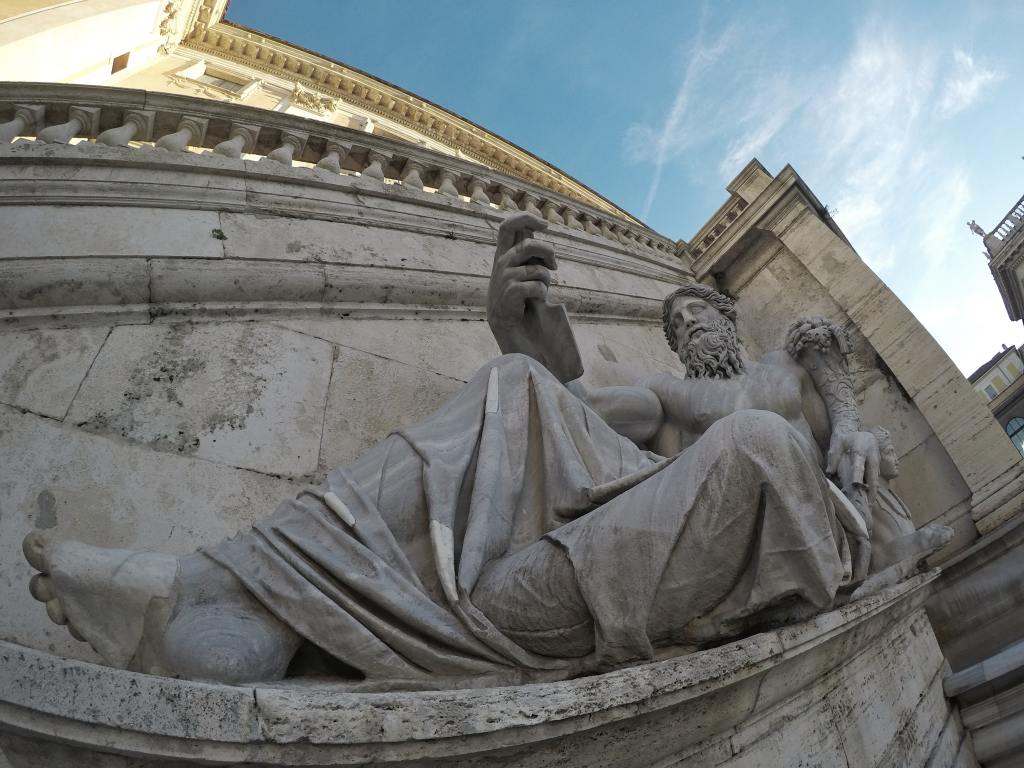
Greek tradition and mythology with its pantheon of gods contained the concept of a demigod or ‘half-god’, born of a god father and human mother and through heroic deeds ascending to the status of god. Such examples include Perseus, Theseus and Hercules, believed to be the offspring of divine beings and human mothers, “caught between two worlds and belonging to neither.”[6]
The Roman culture, which itself was an offshoot of Greek tradition and mythology had become infatuated with the Persian Cult of Mithraism. Mithraism was influenced from the Avatar concept within Hinduism. The Avatar concept within Hinduism states that God manifests himself in created form, often in human form to guide mankind.
The Roman Emperor himself was also often referred to as the ‘son of God’ (Divi fillius), prior to Christ or even ‘Divus lulius’ or ‘the divine Julius’, as afforded to Julius Caesar after his assassination in the year 44BC. The emperor was often seen as a divine figure who ruled by the authority of the gods. The concept of ‘God Emperor’, implying an emperor of divine parentage originated with the Egyptian Pharoah and was until recently the title given to the Japanese Emperor. This idea was propagated through imperial propaganda and reinforced through religious ceremonies and symbols.
Also, of the focal points of ancient Roman religion was the revered Capitoline Triad consisting of three worshipped deities, Jupiter, Juno, and Minerva. Their elaborate temple, situated on Rome’s Capitoline Hill (Latin Capitolium), served as a sanctuary where worship and devotion were offered to these three deities. The Triad occupied “a chief place in the state religion of Rome.”[7]
The Role of Paul in Shaping Trinitarian Christianity
Paul, also known as Saul of Tarsus, played a significant role in spreading his version of the teachings of Jesus during the first century. The Acts of the Apostles provides the main source on Paul’s life and works, with about half of the content dedicated to him.
Paul was brought up as a strict Pharisee, a very legalistic and literalistic Jew in the ancient Greek City of Tarsus (present-day Turkey). He was familiar with the Greek culture and was immersed within the Greek language. According to Acts, Paul initially persecuted the early Christians, or Jews who had converted to Christianity in the vicinity of Jerusalem. According to his own writings, Paul claims that he had a transformative encounter with the risen Christ on the road to Damascus, and from then on, his life took a new direction. He was baptised and began proclaiming that Jesus of Nazareth was the Jewish messiah and the ‘son of God’.
Paul was not one of the original twelve disciples who were personally chosen by Jesus during his earthly ministry. Though, in his writings, Paul claims to have received a direct ‘revelation’ from Jesus, commissioning him to preach the Gospel to the Gentiles (non-Jewish people) and affording him the status of apostle. He founded Christian communities in Asia Minor and Europe between the mid-40s and mid-50s AD.
In his letters, Paul argues that circumcision, in particular, among other Jewish customs are not necessary for Gentile converts to become part of the Christian community. He reasons that Gentiles could be saved by faith in Jesus Christ alone, and that requiring them to follow Jewish customs would be burdensome and unnecessary.
Paul, consistent with his Hellenistic origins, more than other New Testament writers, emphasises the divinity of Christ in his teachings. Paul’s letters contain numerous passages that pervert the message of Christ, exalting his nature to divinity or a component of it.
Paul embarked on three missionary journeys, sharing his very eccentric understanding of the Christian message with non-Jewish communities in various regions as described in the Acts. In his specific writings, Paul refers to Jesus as the Son of God[8], the image of the invisible God[9], and the one in whom the fullness of the Godhead dwells bodily.[10] He speaks of Christ’s pre-existence and his role in creation.[11] Paul also presents Jesus as the one through whom believers receive salvation and reconciliation with God.[12] [13]
Paul’s emphasis on the divinity of Christ intertwines with his theological understanding of Jesus’ redemptive work and his status as Lord and Savior. Paul’s teachings on Christ’s divinity heavily contributed to the development of early Christian theology, particularly in shaping the later notions and deceptions around the nature of Christ, becoming a feature of the ecumenical debates that are discussed later.
Traditionally, 14 of the 27 New Testament books are attributed to Paul. As such, the paganistic doctrine of Paul, a non-disciple of a Hellenistic inclination, known as the Pauline Theology or ‘Paulism’ dominates the New Testament and the contemporary majority of the Christian world.
Paul’s open undermining of the sacred laws and prophetic practices further reveals his oblivion to the pervading spiritual necessity and enlightening power of God’s laws, practiced by Abraham, Moses and Jesus, intended to persist throughout the monotheistic traditions. Paul reduced what were understood as the vehicles of spiritual ascension to hollow arbitrary customs and traditions. By this, he paved the way for Christianity’s complete independence, divorced from the transcendent anchorage of both necessary sacred rites and creedal integrity.
Paul’s Role in the Pivotal but Overlooked Council of Jerusalem in 48AD
Centuries prior to the famous Council of Nicea in 325AD was the pivotal Council of Jerusalem taking place around 50 AD. The Council of Jerusalem is not considered an ‘Ecumenical Council’ because it did not involve the participation of bishops from all regions of the Christian world (as the Christians were still centralised in the region of Christ’s ministry). It, thus tends to be given little attention by contemporary Christian denominations despite being attended by some of the 12 apostles who had seen Jesus including James called the ‘Brother of Jesus’, Peter and John.[14] Its purpose was to address a crucial issue: whether Gentile Christians (ethnically non-Jewish converts) were required to follow the Mosaic Law of the Jews. The council was prompted by some Judaic Christians from Jerusalem who insisted that Gentile Christians from Antioch in Syria should be circumcised according to Jewish customs.

Paul’s Spiritual ‘Revelations’ or His Psycho-Emotive Complex?
To resolve the matter of gentile converts, a delegation led by Paul and his companion St. Barnabas was appointed to meet with the church elders in Jerusalem and engage in discussions. Allegedly, the council eventually determined that Gentile Christians did not need to observe the Mosaic Law or specifically the ‘Levitical ceremonial regulations of the Jews’ except for what became known as the Apostolic Decree: that they are to (still) abstain “from what has been sacrificed to idols and from blood and from what is strangled and from fornication.”[15]
If the accounts of the council are accurate, it seems that Jesus’ Jewish apostles were ready to concede the stipulatory requirement of circumcision on converts to ease their entry into the fold. Their insistence on emphasising more creedal abstentions, the sacrifice to idols, and fundamental prohibitions such as fornication accentuates the requirement of the continuous observance of essential creedal issues and laws.
For Paul, this concession seems to have extended much further, validating his wish to completely separate from Jesus’ Mosaic Law and creed. In fact, Paul audaciously operated independently of Jesus’ elected apostles, preaching what he calls his “Gospel”. The notable chronological gaps in meeting the apostles (for guidance and education) suggests there was a Christianity before Paul, and another one after.
Paul’s meeting with the apostles was not only sporadic but marred by tension, disagreement and what seems to be jealously for their direct choosing and not his. In his letters, he sarcastically refers to the leaders of the Jerusalem church and Jesus’ disciples, James, Peter and John as the “so called pillars of the church”, “those reputed to be somebody” and adds that “what they are means nothing to me.”[16]
In one of his later writings, he asserts “I am not the least inferior to these super-apostles”, expressing a deep-rooted separation from the earliest followers of Christ and much a personal animosity to their status as scholarly pillars and leaders of the Christian world. He even blasphemously calls them “false apostles…disguising themselves as apostles of Christ.”[17] Circumcision for him, though a practice of Christ himself was reprehensible and worthy of mockery. He preposterously states, “look out for the dogs, look out for the evil-workers, look out for those who mutilate the flesh.”[18] [19]
Paul denies that his final visit to the city was actually a summoning to Jerusalem by the apostles. On this visit, Jewish-Christians who were significantly concentrated in Jesus’ homeland reprimanded Paul for not preaching the decisions of the Council of Jerusalem, including his teaching that gentiles could “eat anything sold in the meat market without raising questions of conscience”[20] which was in explicit contravention to the Apostolic Decree.
In his letters, he stresses that his own subjective experiences of ‘revelation’ from Jesus who manifests to him in spirit are more significant than anything Jesus taught on earth, thus superseding the experiences of the apostles. [21] [22] He brags about having worked harder than any of them, downplaying those who had intimately known Jesus, face-to-face as an experience of mere flesh, far beneath his superior, (tenuous) ‘visions’.[23] Paul refers to his message as “my gospel”, dispelling commonality with the Torah, severing his teachings from it and deeming it obsolete by affirming a new Torah of Christ.[24] He stopped short of outright denying the God of Israel, but maintained that alongside this God was a heavenly lord, of a cosmic heavenly family; Jesus that the whole universe was in obedience to.[25]
Pivotally, by the revocation of Mosaic ‘customs’, Paul’s inordinate influence above those who had met, lived and were chosen by Christ paved the way for ‘Christianity’ to become a completely distinct religion, not only severed from customs, as was Paul’s purported intention, but from the Judaic creedal texts and immutable realties that stressed the Oneness of God. Above all, this separation also seemingly allowed later ‘Christian’ bishops to ignore the Old Testament’s fundamental Commandment:
“Thou shalt have no other gods before me.”[26] – The One God
References:
[1] Qur’an 16:36
[2] Qur’an 5:111
[3] Wikipedia – Ebionites: Jesus the Nazarene
[4] Psalm 89:26–28
[5] Luke 3:13
[6] The Greek Myths by Robert Graves
[7] Ryberg, Inez Scott (1931). “Was the Capitoline Triad Etruscan or Italic?”. The American Journal of Philology. 52 (2): 145–156. doi:10.2307/290109. JSTOR 290109.
[8] Romans 1:3-4
[9] Colossians 1:15
[10] Colossians 2:9
[11] Colossians 1:16-17, Philippians 2:5-11
[12] Romans 5:10, 2 Corinthians 5:19
[13] There is a similar notion of Buddha within Buddhism
[14] Recorded in Chapter 15 of the Acts of the Apostles
[15] Acts 15:29
[16] Galatians 2:6,9
[17] 2 Corinthians 11:5, 13
[18] Philippians 3:2
[19] Paul and Jesus How the Apostle Transformed Christianity. James D Tabor, 2012
[20] Corinthians 10:25
[21] Paul and Jesus How the Apostle Transformed Christianity. James D Tabor, 2012
[22] 1 Corinthians 15:9-11;2
[23] 2 Corinthians 5:16; Philippians 3:3
[24] Galatians 3:23-26
[25] Paul and Jesus How the Apostle Transformed Christianity. James D Tabor, 2012
[26] Exodus 20:2-17

 SarimBlog
2 thoughts on “The Loss of Balance – Christology (Part 1 of 3)”