At Muzdalifah, endless pilgrims line the earth, sleeping under the night sky, draped in white, as far as the eye can see. Like shrouded bodies they rest, side by side, until the break of dawn when they rise, much like the resurrection…
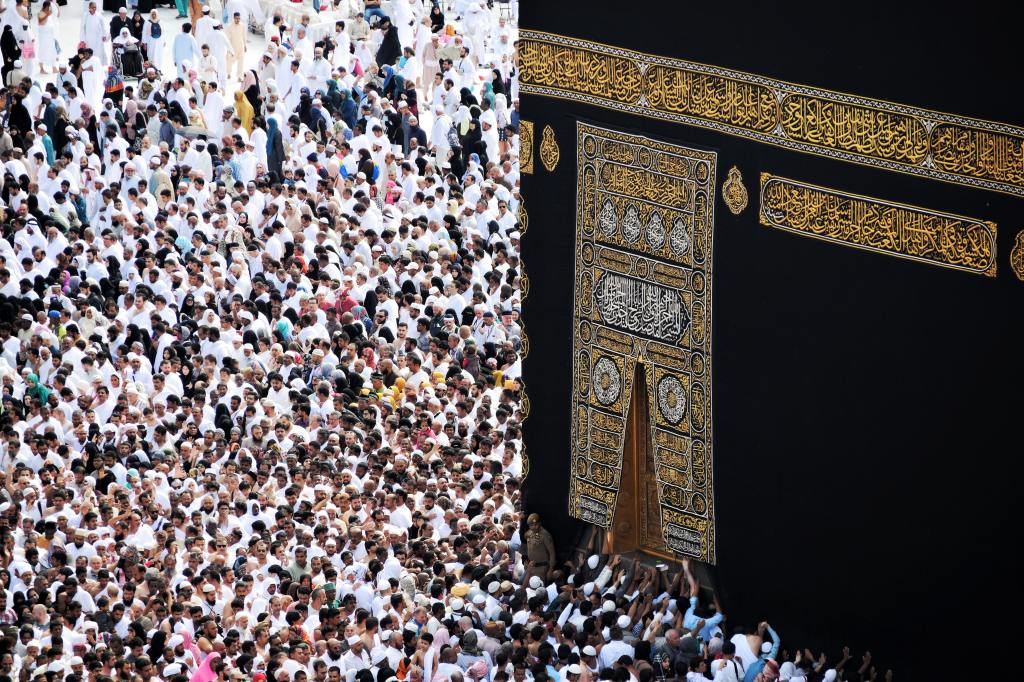
Acts of worship are replete with symbolism, or expressions of greater realities and meanings, beyond their isolated, literal appearances. The insightful Muslim will recognise that many aspects of Hajj are synonymous to the Day of Reckoning. On this day, people will be unclothed, walking under intense heat and headed for a single destination.
When the mother of the believers, ‘Aishah rady Allahu ‘anha asked if in such a circumstance, undressed men and women will be looking at one another, the Prophet remarked that their preoccupation is far too great that they show any interest in such a trivial thing:
‘A’ishah, the matter would be too serious for them to look to one another.[1]
Consider that Hajj, when pilgrims walk in unison, beneath the sweltering heat, alongside masses of others, headed for one rite after the next and wrapped in two loose cloths. It is a time when the commotion and activity that surrounds one means very little, as each pilgrim thinks mainly of themselves and their own hardships.
At Muzdalifah, endless pilgrims line the earth, sleeping under the night sky, draped in white, as far as the eye can see. Like shrouded bodies they rest, side by side, until the break of dawn when they rise, much like when they rise from their graves during the resurrection, ahead of a day longer than 50,000 years.
The conscious pilgrim will better imagine that terrifying day, yearning more for the pleasure of their Creator. Hajj is the greatest journey of one’s life, but remains a lesser symbol of an even greater day ahead. The strenuousness of Hajj never diverts the pilgrim’s attention from its purpose, to make this their ‘journey of a lifetime’, just as their attention in the hereafter, a day more intensely difficult, remains even more fixated on their final destiny; to heaven or to hell, the ultimate outcome of one’s lifetime.
Thinking of Hajj in this way, it becomes hardly surprising that the very first verse of the chapter of Hajj, which is one of two chapters in the Qur’an that speaks of the pilgrimage and its associated rites in any detail, begins with:
“O humanity! Fear your Lord, for the ˹violent˺ quaking at the Hour is surely a dreadful thing. The Day you see it, every nursing mother will abandon what she is nursing, and every pregnant woman will deliver her burden ˹prematurely˺. And you will see people ˹as if they were˺ drunk, though they will not be drunk; but the torment of Allah is ˹terribly˺ severe.”[2]

 SarimBlog